GODOT / THREE.JS / MOVEMENT DESIGN
Hope in Movement
A movement-shooter prototype built around skiing, carving, flight and radial gravity.
Four worlds to explore. One idea: movement should be something you learn to perform, not just a way to get to the next fight.
September 8, 2026 · Development build · Keyboard and mouse · No account required
Choose a world
Images from the Godot version; browser graphics are simplified.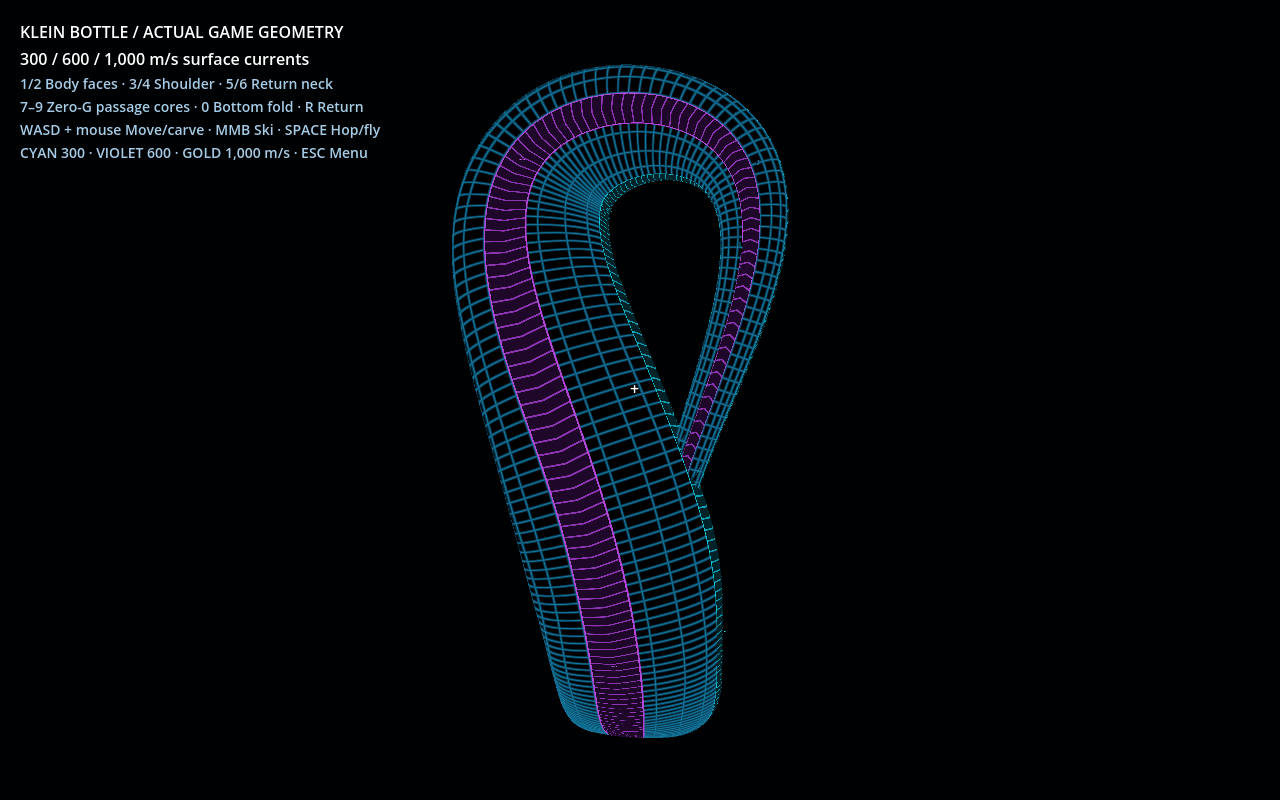
Klein bottle
Classic Klein Bottle
Explore a rounded bottle body and a narrow neck that folds back through its side. Ski on either face, follow the coloured surface currents, or coast through weightless passage centres.
The newest exploration study: a roughly 6 km-tall bottle with 300, 600 and 1,000 m/s strips. No ramps, buildings or combat; the focus is movement and two-sided gravity.
Play klein bottle in browser ↗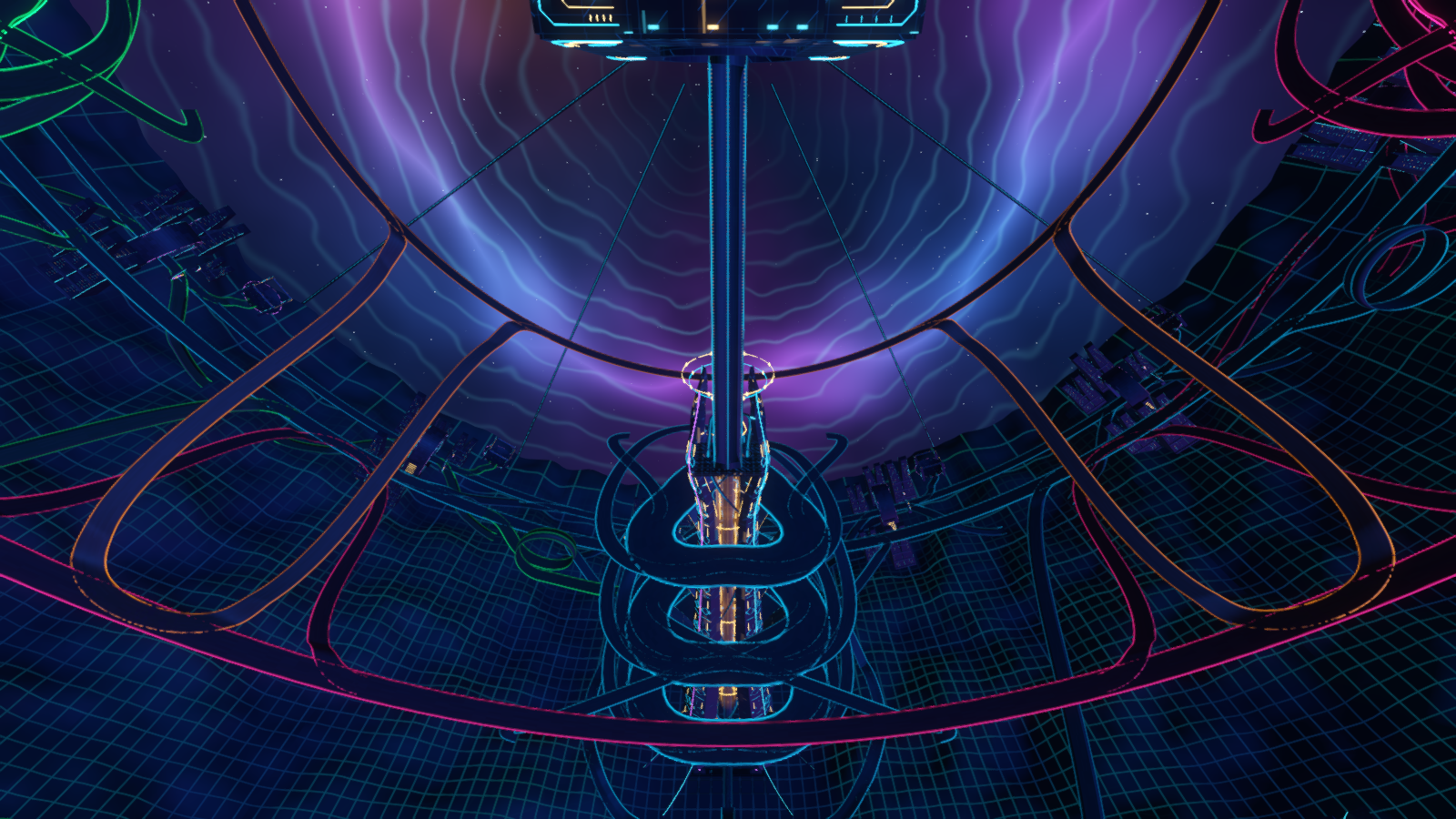
Cylinder
Living Circuit
Ski around the inside of a vast cylinder. Four inward-facing spires, layered energy paths and a suspended central structure create routes above, below and around you.
The main Godot world: exploration, weapons, offline bot matches and objective experiments.
Play cylinder in browser ↗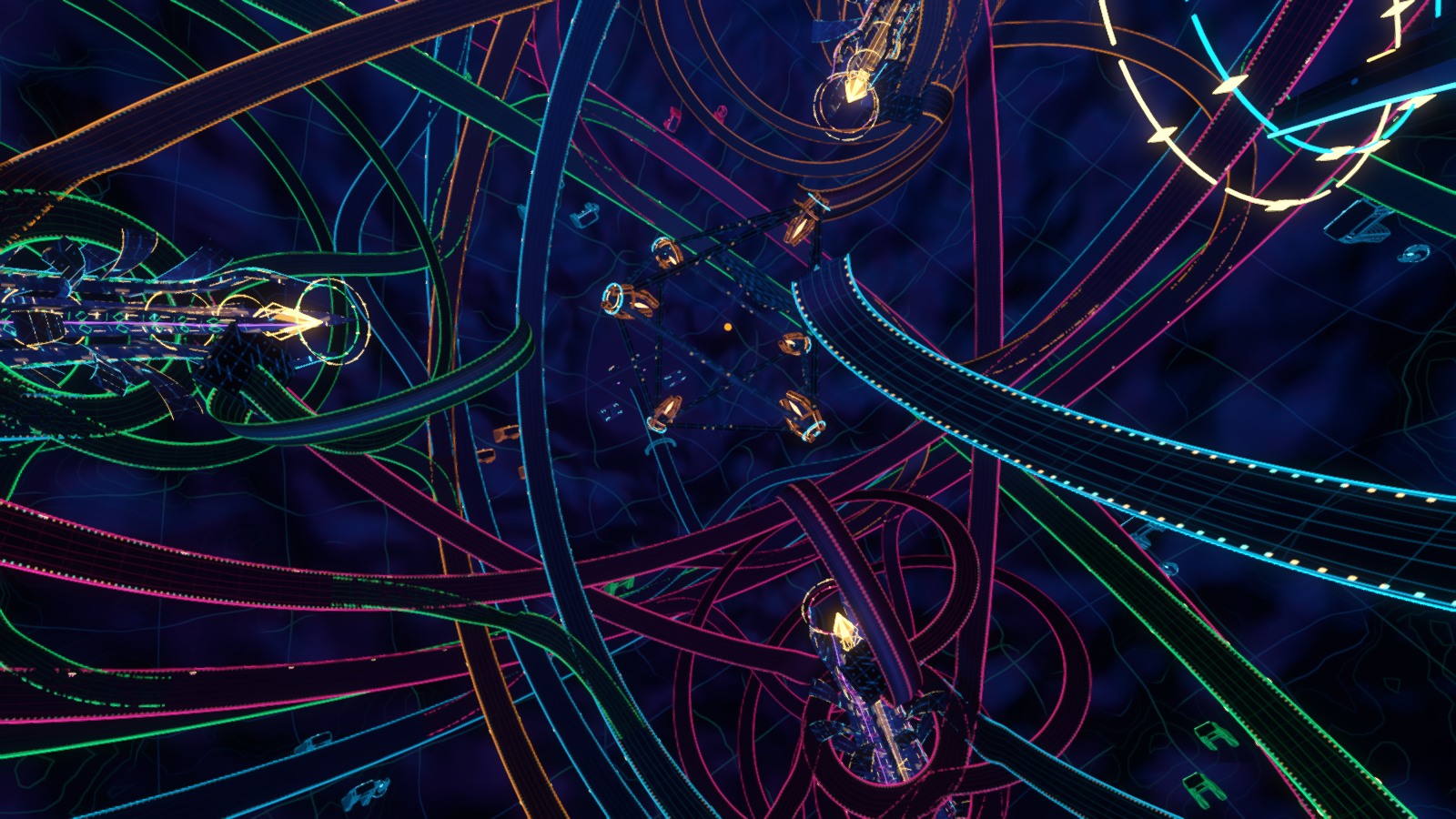
Sphere
NEST
A world wrapped around the inside of a sphere. Linked paths and terrain let you turn a fall into a flight and approach the same place from a different direction.
An exploration map focused on spherical gravity and movement, not a finished competitive mode.
Play sphere in browser ↗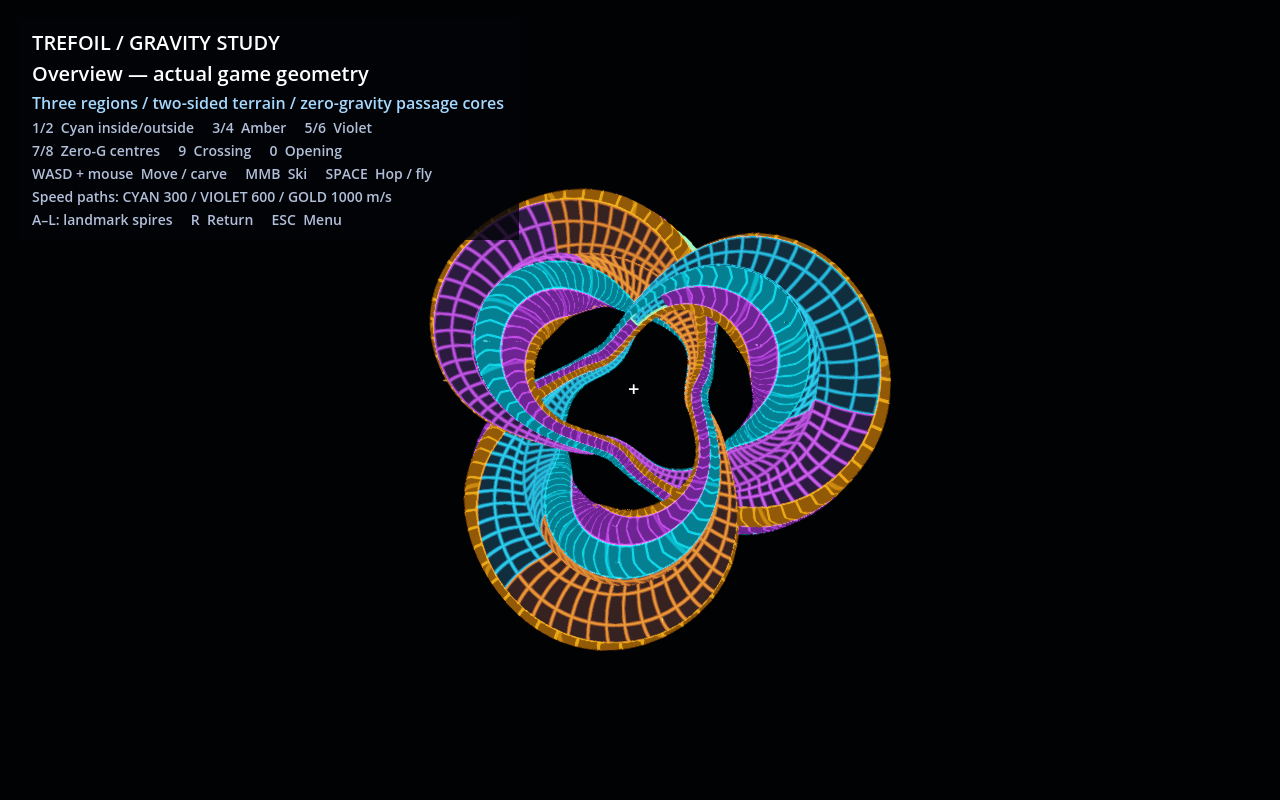
Bottle study
Trefoil Klein
An experimental, self-crossing bottle surface with narrow necks, rounded chambers and local zero-gravity centres. Travel on either side, using A–L landmarks to keep your bearings.
A rough gravity study. Cyan, violet and gold paths boost skiing toward 300, 600 and 1,000 m/s. Crossings use a gameplay interpretation of a Klein bottle.
Play bottle study in browser ↗Why I built it
I enjoy the speed and momentum of games such as Tribes and Quake. I wanted to explore a different combination: skiing that you can actively carve, flight sustained through coordinated movement, and worlds where the ground is not always beneath the screen.
The cylinder, sphere and two bottle studies are experiments in that idea. Their shape changes which routes you can see, how you build speed, and how you get back to somewhere you have already been. The visual direction treats the environment as a luminous, constructed world rather than a realistic landscape.
How the movement works
Skiing preserves momentum while slopes and timed turns help you gain speed. Moving the mouse and alternating your directional input makes carving an active skill. Energy paths provide visible ways to accelerate and explore.
Flight builds on the speed you already have. It is not a free camera or automatic route-following. Gravity follows each world’s geometry; the character automatically aligns to local up so the player does not need a separate roll control. In the bottle studies, the gravity field also handles the transition between a surface and a low-gravity passage.
Your first minute
- Open the browser demo, choose a world, then select Play. It captures the mouse; Esc releases it.
- Hold W and C or middle mouse to ski. Start on an energy path and build speed.
- Make smooth mouse turns, alternating A and D with the direction you are turning.
- Release ski and hold Space to try flight. Use Shift to brake, or R to return to your selected start.
Just want to look around? Select Camera tour or Free camera. Those are separate from the playable movement system.
For a lighter load, choose Low graphics. The playable demo is designed for a desktop or laptop, not phone touch controls.
Browser demo or Godot game?
Play immediately · Three.js
A small, standalone movement demo with all four worlds, simplified lighting and collision, and no install. No combat, bots or multiplayer are included.
Selected movement equations and gravity behaviour are adapted from the native game. This is not the full Godot game running in a web browser, and it is not a claim of identical physics.
Open browser demo ↗Explore the full prototype · Godot
The Windows version includes all four worlds, the richer lighting and architecture, weapons, movement guidance, a tutorial, and the cylinder’s offline gameplay experiments.
Extract the whole ZIP and run HopeInMovement.exe. Keep its companion files together. Godot itself does not need to be installed.
Windows x64 · Vulkan-capable graphics · Unsigned prototype. Do not disable security software to run it.
In Godot, start with Learn to Move, or select a world from the main menu. Use middle mouse to ski, Space to jump/float, right mouse to zoom and left mouse to fire where weapons are available. Controls can be reviewed in Options. The two bottle maps are exploration studies, not combat maps.
Windows release: September 8, 2026 · SHA-256 download checksum · The ZIP includes controls and engine license notices.
My role, and why it belongs in my portfolio
I set the movement goals, world layouts and visual direction. I play-test builds, record what goes wrong, narrow down how to reproduce it, and decide whether a change actually improves the experience. AI tools contribute code, debugging and art production; I do not present this as code I wrote unaided.
For IT support, help desk and technical operations roles, the useful evidence is the working process behind the game:
- Turn a vague problem into a reproducible one
- “I lose speed” becomes a specific ramp junction, direction and contact condition that can be checked again after a change.
- Make changes recoverable
- Backups and separate movement checkpoints let me compare behaviour and preserve a working baseline while other systems change.
- Test the result, not just the claim
- Movement fixtures, collision checks and packaged-build checks provide repeatable evidence. Hands-on testing is still necessary; a passing test is not proof that every player’s PC will work.
- Document a usable handoff
- Clear controls, platform requirements, limitations and verified release files help another person try the project without access to my development machine.
This is a personal project, not a substitute for production support experience. It shows curiosity, persistence, technical communication and a willingness to investigate why something is not working.
A longer conversation about the project
Watch: Explaining my game ideas and 'state machine' development.
I talk about Hope in Movement, my game ideas and the development process.
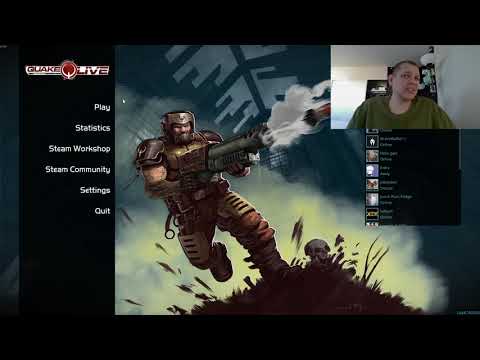 Watch on YouTube ↗
Current limits and next steps
This is a playable prototype, not a finished commercial game. First loads can take time; performance, collision edge cases and movement readability still need broader testing. The browser's automated checks cover selected equations and world traversal, not every browser or graphics card.
Online multiplayer is planned but not available. Next priorities are broader hardware testing, clearer onboarding, and combat spaces that create readable fights without removing the freedom of the movement system.
Ask me about the project ↗